Junior Diplomatic Academy students visited the Verkhovna Rada of Ukraine’s Educational Center
November 19, 2025
Junior Diplomatic Academy students from the Kyiv Palace of Children and Youth visited the Verkhovna Rada of Ukraine’s Educational Center. Despite the tense situation in Parliament and an ongoing plenary session, the meeting went ahead as planned. Moments like these highlight an important truth: each of us carries responsibility for shaping the country’s future.
Participants had the opportunity to engage with Pavlo Bulhak, advisor to the Deputy Speaker of the Verkhovna Rada of Ukraine (IX convocation), and a member of Olena Kondratiuk’s team. Given the complex political context, the meeting was held without media coverage, creating space for an open and trust-based conversation. In times like these, it is not only about addressing challenges, but also about preventing political tensions from escalating into a broader national crisis.
Pavlo Bulhak highlighed that the Junior Diplomatic Academy is a truly unique initiative, noting that very few high school students demonstrate such a deep and responsible interest in political life. He also conveyed warm greetings and apologies from Olena Kondratiuk, who was unable to attend due to political circumstances but expressed her intention to meet with the students in the future.
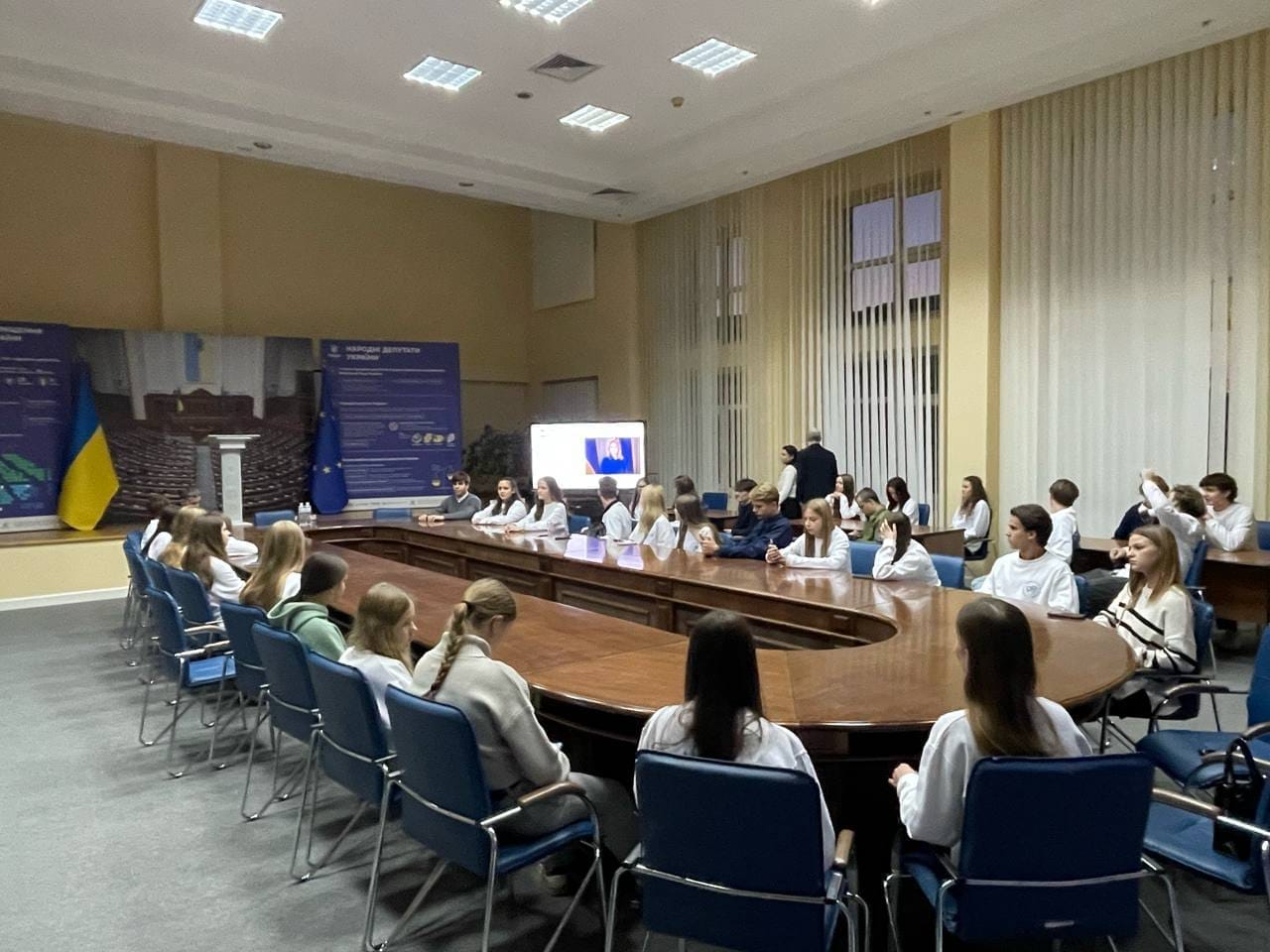
The meeting focused on the role of parliament during wartime.
In the discussion, future diplomats explored the key dimensions of the Verkhovna Rada’s function in times of war:
Safeguarding parliamentary legitimacy.
As one of the few institutions democratically elected and internationally recognized, the parliament plays a crucial role. This is why foreign leaders often address Ukrainians directly from its chamber when visiting the country.Parliament as a pillar of democracy.
EU accession negotiations require alignment with democratic principles and core European values. This means the parliament must remain transparent, encourage open debate, and maintain communication with society. The resumption of parliamentary session broadcasts is a significant step toward this goal.Parliamentary diplomacy.
This includes securing international support, strengthening Ukraine’s position globally, engaging with partners, and advancing national priorities on the international agenda.Ukraine’s path toward the EU and NATO.
In recent years, the Verkhovna Rada has passed over 100 laws related to European integration. The country continues to align its legislation with EU standards, while parliament is also considering a streamlined process for adopting integration-related bills.
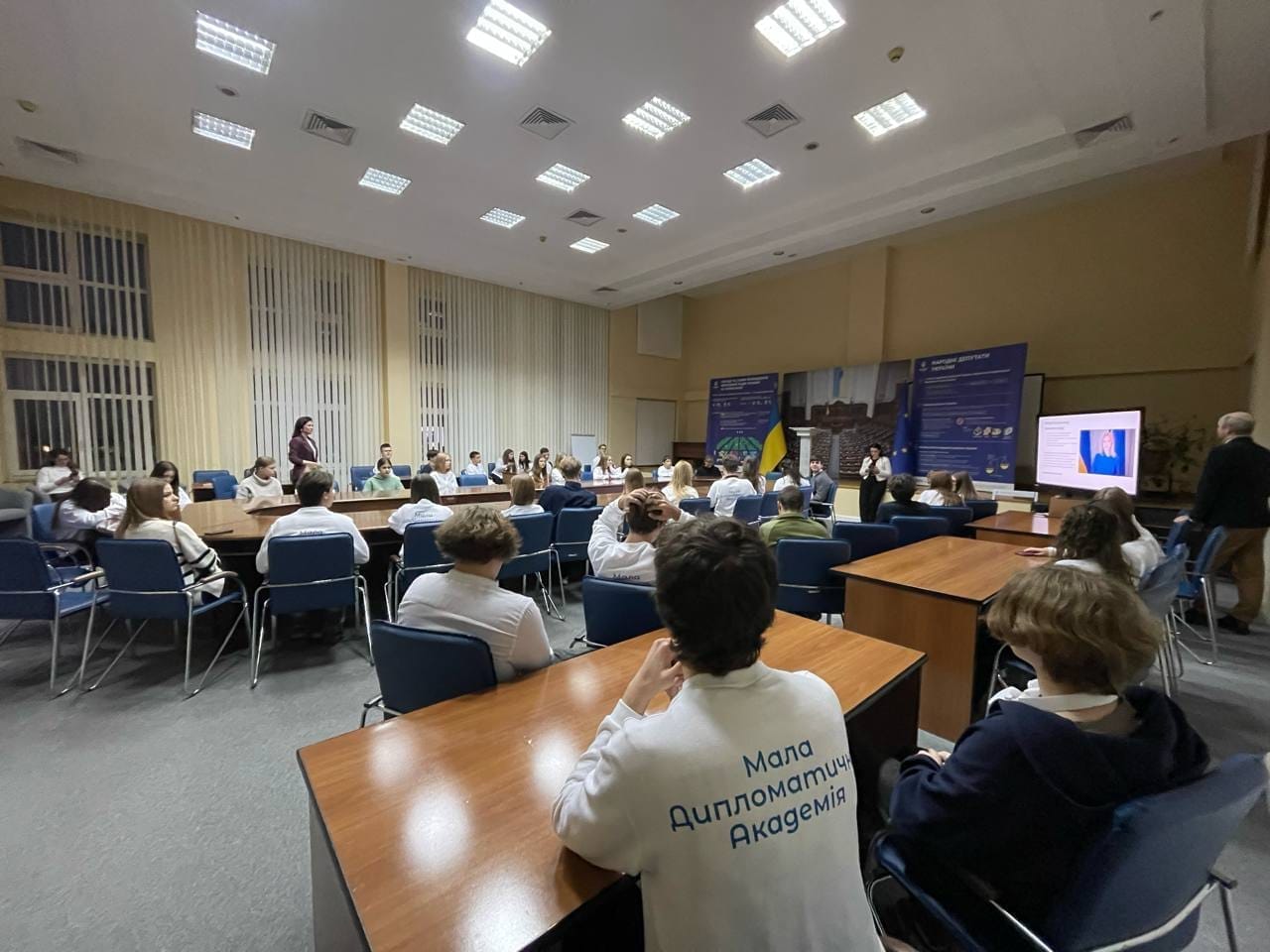
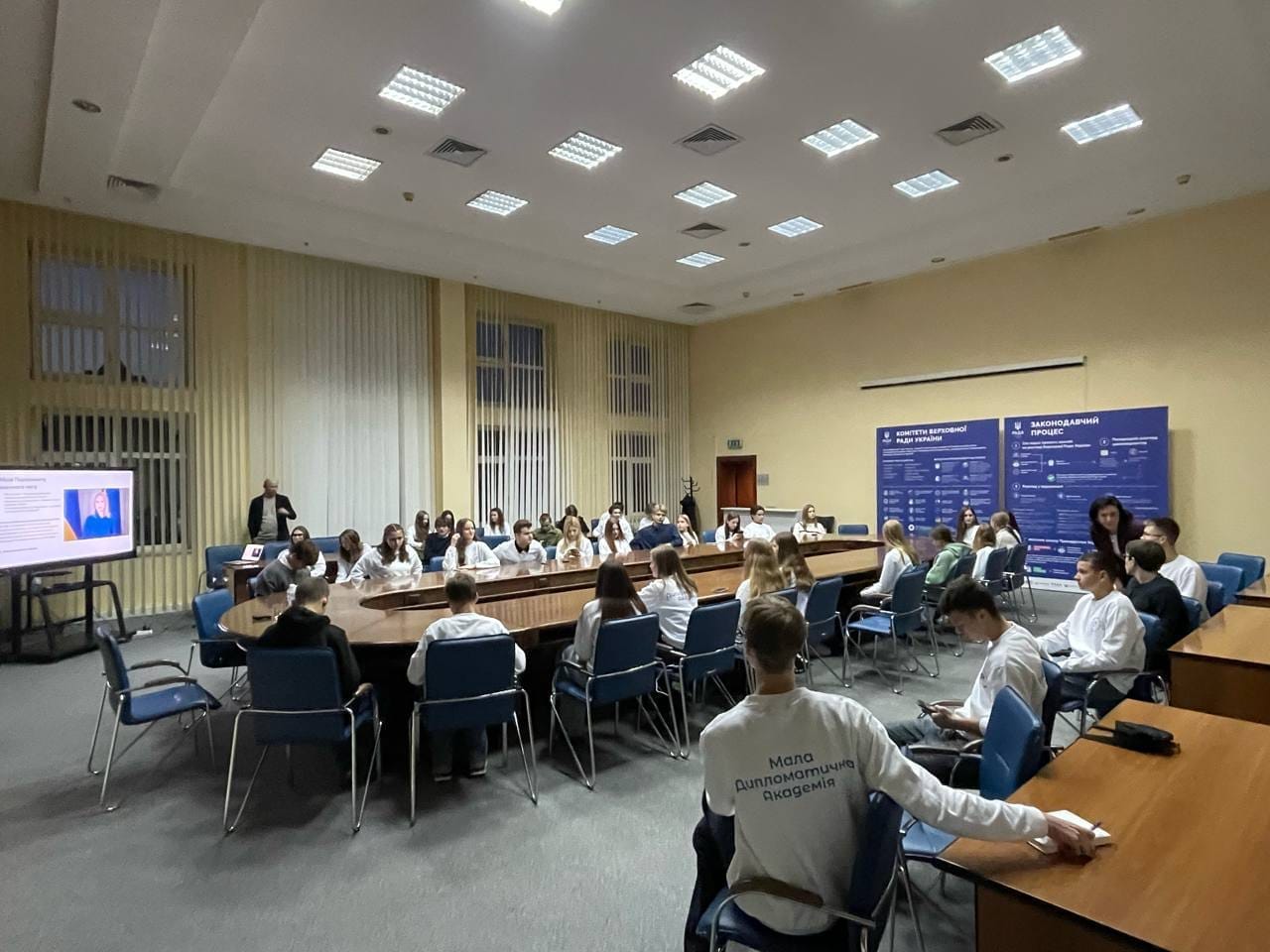
The students showed impressive preparation: Junior Diplomatic Academy participants confidently answered advanced questions about legislative procedures, including how many readings a bill requires and how many votes are needed for adoption — something that genuinely impressed the advisor.
A key message highlighted during the meeting was:
“Ukraine’s accession to the EU is, in itself, a guarantee of European security.”
Participants were also introduced to the concept of “Twitter diplomacy” and explored how global leaders use social media to communicate effectively across borders. They discussed the European Commission’s positive report and noted that EU integration laws in Ukraine currently receive broad support from both the ruling majority and the opposition.
Junior Diplomatic Academy students asked thoughtful and well-informed questions about Ukraine’s path to EU membership and the role of parliamentary diplomacy in wartime. Particular attention was given to how parliamentary diplomacy began in the very first days of the full-scale invasion — when lawmakers convened to vote for martial law and carried out initial international visits to Poland, Lithuania, Latvia, and Estonia.
The discussion also touched on the increasing role of women in governance: today, women make up 21% of parliament and 22% of the Ministry of Foreign Affairs workforce.
Overall, the meeting played an important role in developing the strategic thinking of young people eager to understand how the state operates and the critical role parliament plays during wartime. The Junior Diplomatic Academy continues its mission of shaping a new generation of leaders — individuals who act responsibly, think critically, and represent Ukraine with confidence on the global stage.
