Media literacy without illusions
November 27, 2025
Junior Diplomatic Academy students attended a screening of the documentary “Pranked,” held at the Kyiv Palace of Children and Youth and hosted by the YUN-PRES Information and Creative Agency. Directed by Ismaël Joffroy Chandoutis, the film explores the phenomenon of “swatting” — a dangerous form of cyber harassment often targeting online gamers. It reveals how the boundary between the digital and real worlds is increasingly blurred, and how seemingly harmless online pranks can escalate into serious real-life threats.
Following the screening, students gained valuable insights into online safety, common phishing tactics, and digital manipulation from Ihor Rozkladai, a media law and content moderation expert at the Centre for Democracy and Rule of Law. They also discussed how to assess the credibility of information, verify sources effectively, and where to seek help if someone becomes a victim of online abuse.
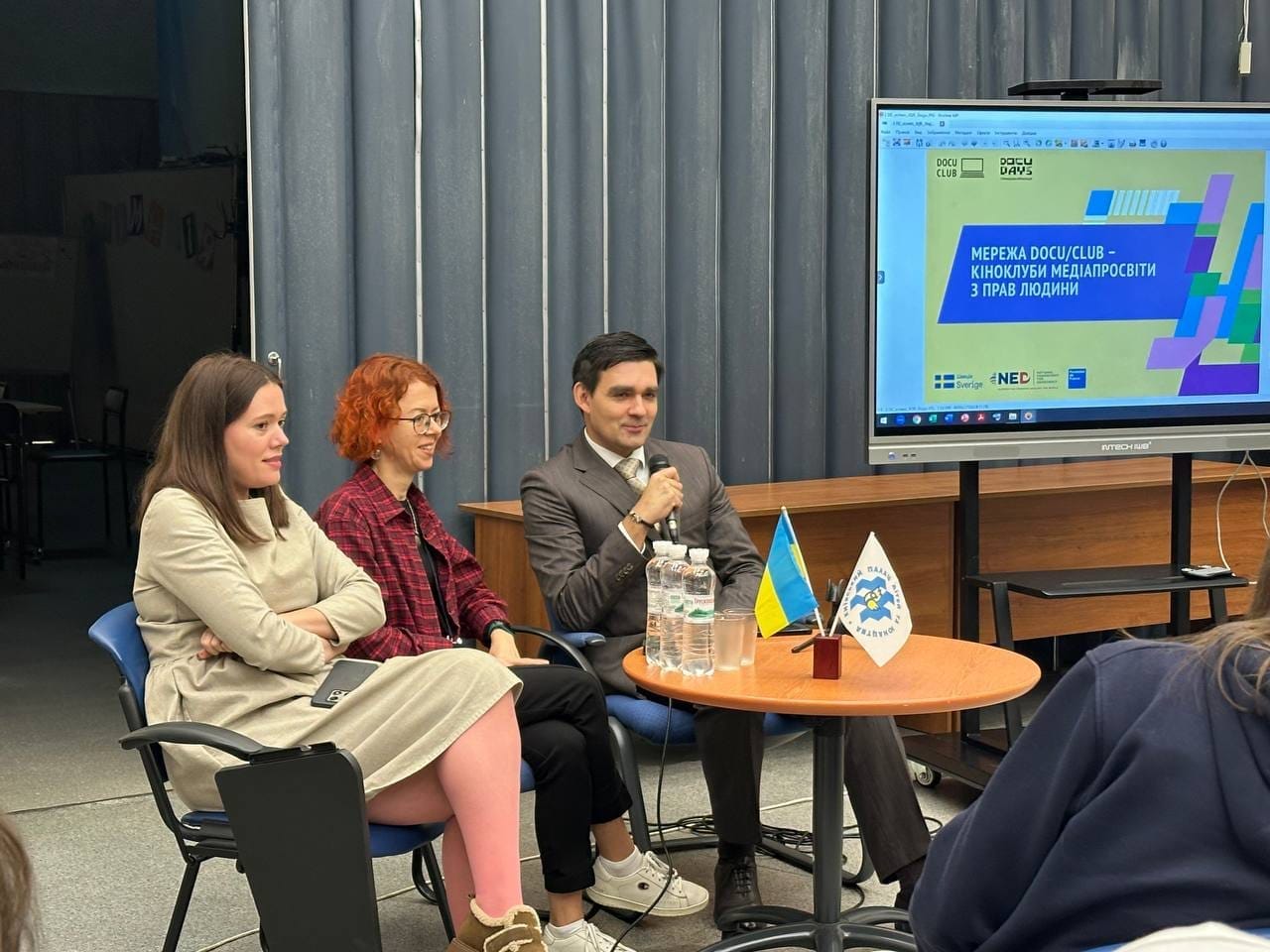
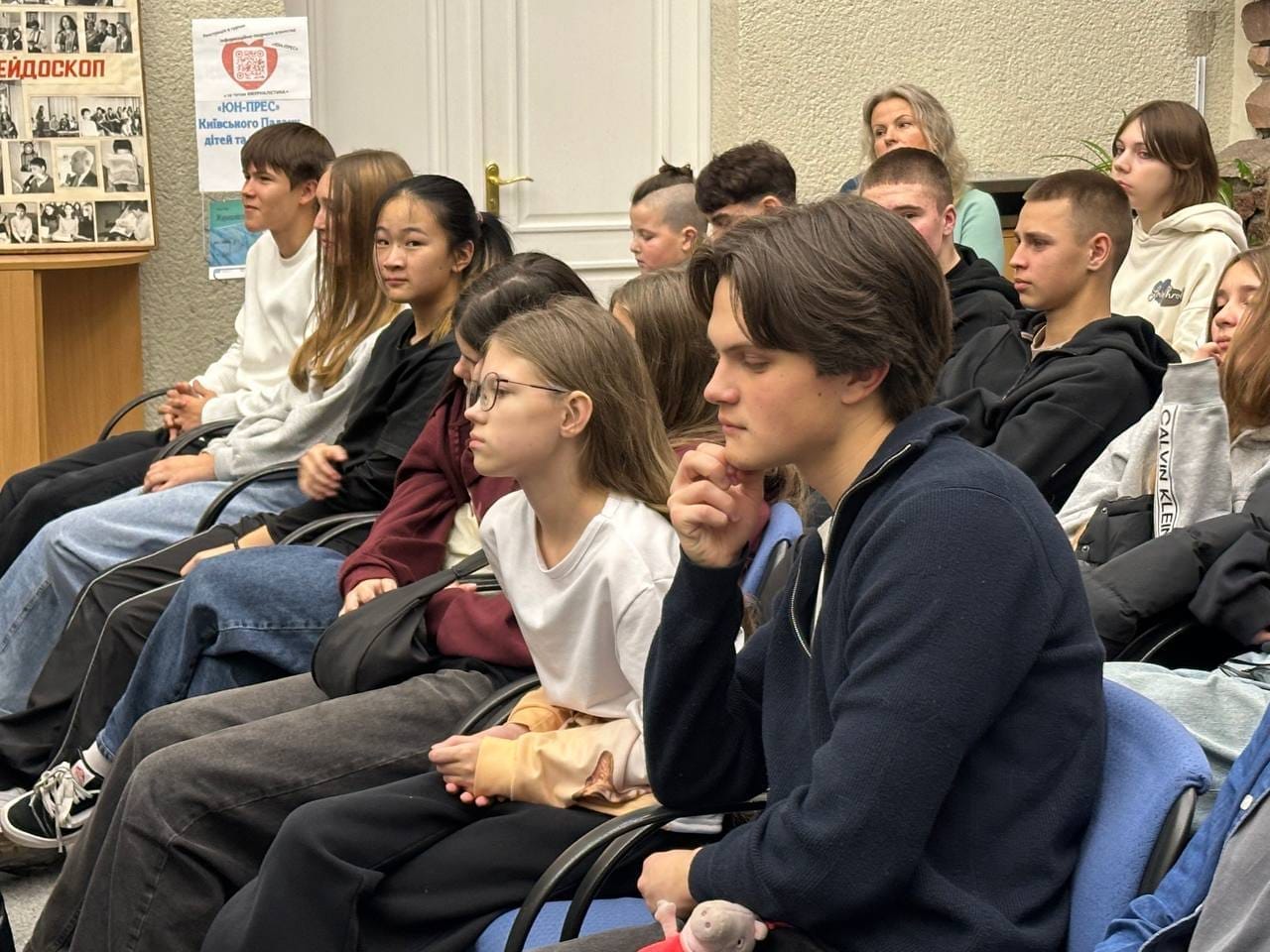
Journalist and StopFake co-founder Olha Yurkova spoke about the information and psychological campaigns that accompany real-world warfare. Students learned how adversaries attempt to shape public opinion, deepen divisions, and create chaos in the media space using fake news, manipulation, and increasingly sophisticated AI-generated visuals.
Together with experts, the students explored how information bubbles form, why social media feeds present different realities to different users, and how algorithms create personalized worldviews. They also examined the impact of social media on public sentiment, the mechanics of viral narratives, and why emotionally charged content spreads the fastest. The session also covered common online scams, practical ways to detect misinformation, and strategies for avoiding manipulation in the digital environment.
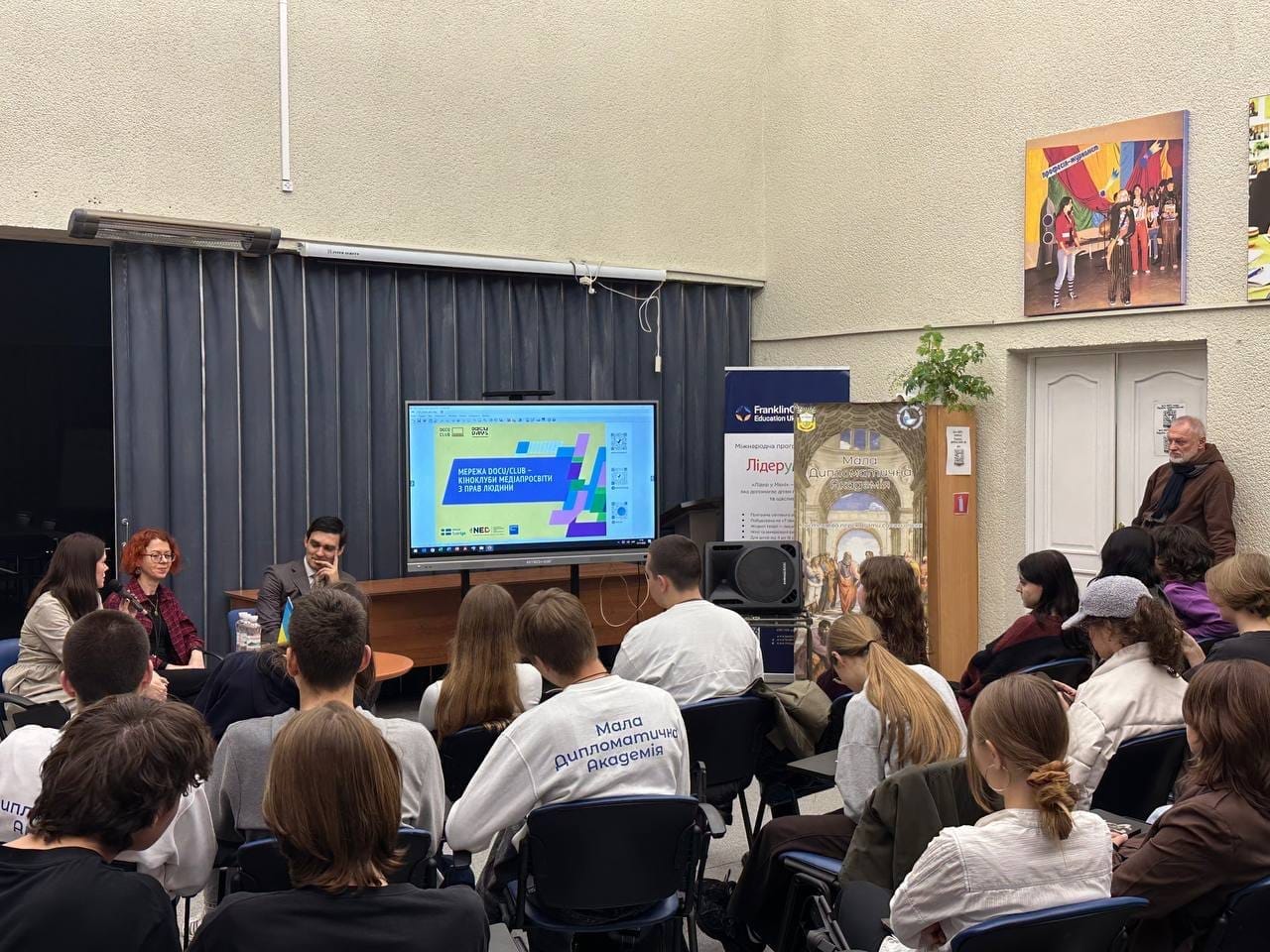
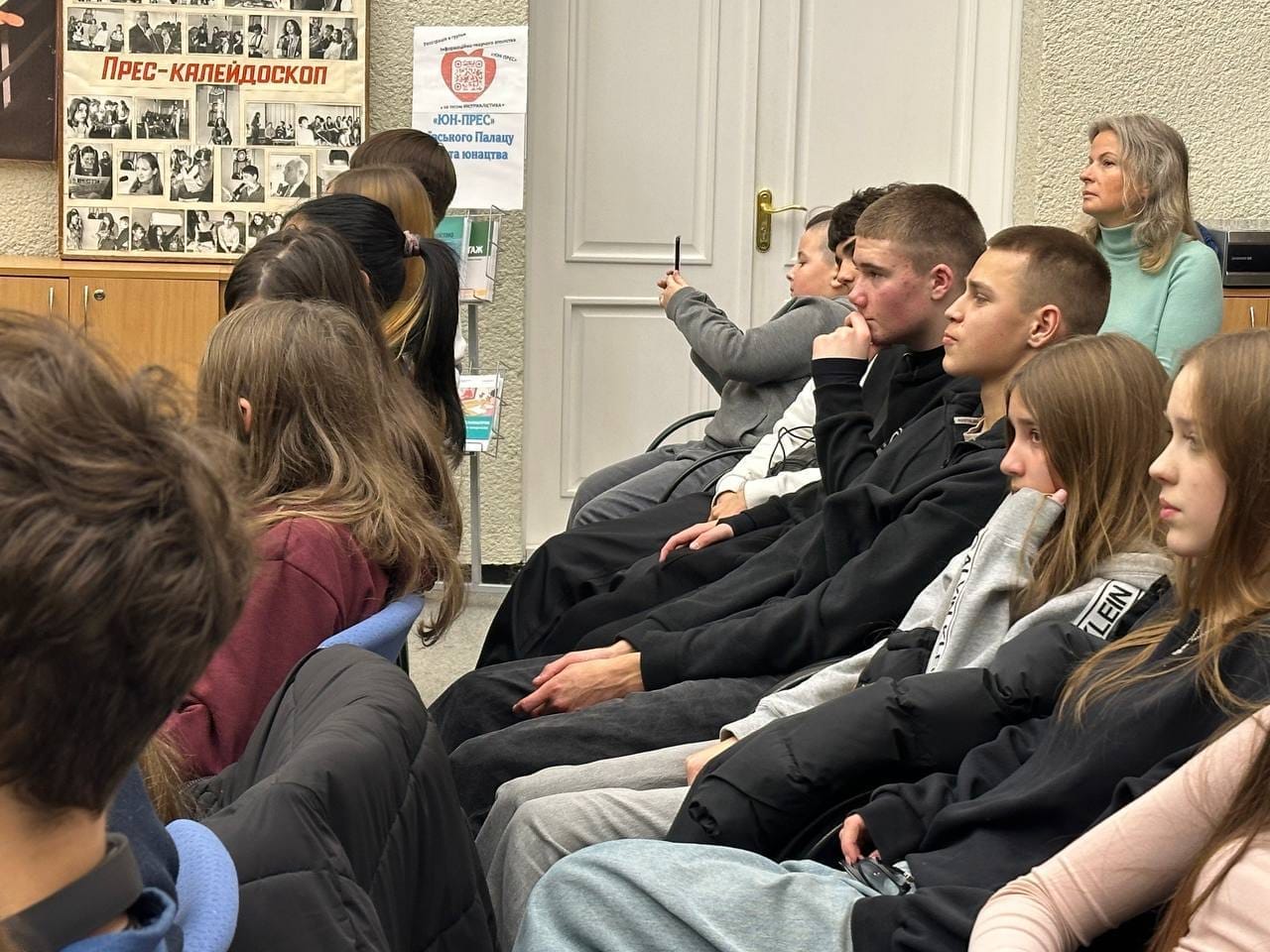
The discussion focused on the realities of information warfare — how adversaries attempt to influence public opinion, manipulate emotions, and create divisions within society. Experts highlighted that propaganda spreads across all platforms, from social media and messaging apps to comment sections and even games like Roblox. Speakers shared practical guidance on verifying information sources and explained what steps to take if someone becomes a victim of cyber abuse, including where to seek support. Ms. Olha also introduced a simple yet powerful rule: fake content is designed to divide, provoke fear or hatred, and intensify conflict — while trustworthy information brings people together.
The students’ strong preparation enabled them to actively engage in the discussion — confidently answering questions, debating media dynamics, providing examples of manipulation, and analyzing today’s digital risks.
As Rita Kosyak, head of the Kyiv Palace of Children and Youth project office, noted: “This event marked another important step in the Junior Diplomatic Academy’s educational journey. Students gained practical critical thinking skills, learned to recognize the logic behind disinformation, act responsibly in the media space, and understand that media literacy is an essential skill in today’s world.”
